Winning Strategies
Selecting just the right orchid is a lot of fun, but before purchasing, there are a few things you should know about yourself and orchids.
CHOOSING THE BEST ORCHID
Before heading to the store, shopping online for an orchid, or attending an orchid show, I recommend having a general idea of what you want before making a purchase. Are you looking for an easy-care orchid, or are you ready to take on a more challenging variety? Is a beautiful orchid from the grocery just what you’re looking for, or are you willing to pay more online for a specific variety that is unavailable at the grocery store? There are no right or wrong answers to these questions. It is just a matter of preference and budget 😉
After deciding which kind of orchid you are interested in, I’ll show you how to select the healthiest plant, from roots to buds.
Some of the links on this page may be affiliate links. Click here to learn more.
Easiest Care Orchids
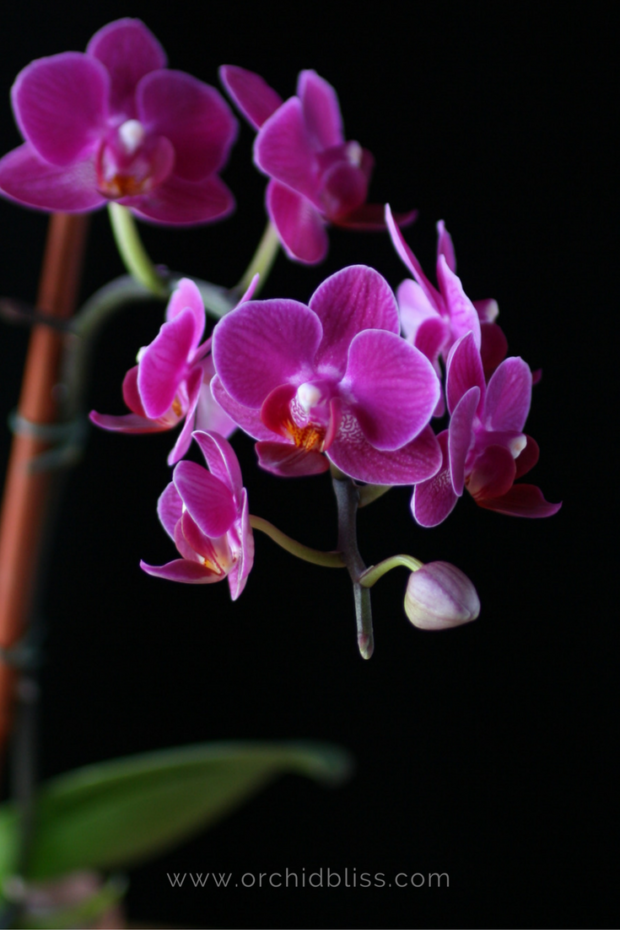
If you are looking for the best odds, I recommend a Phalaenopsis, or moth orchid. This is the orchid found in most grocery stores. They come in a variety of colors, and the flowers can last for several months. Phals are available in both standard and mini sizes, with similar care requirements. Although the minis will need to be watered more frequently, due to their petite pot size.
If you are not in a rush for your plant, I suggest talking to the store clerk over the floral department and asking when their orchid shipments come in. This way you will get the best selection and the healthiest plants.
More Adventurous Orchids
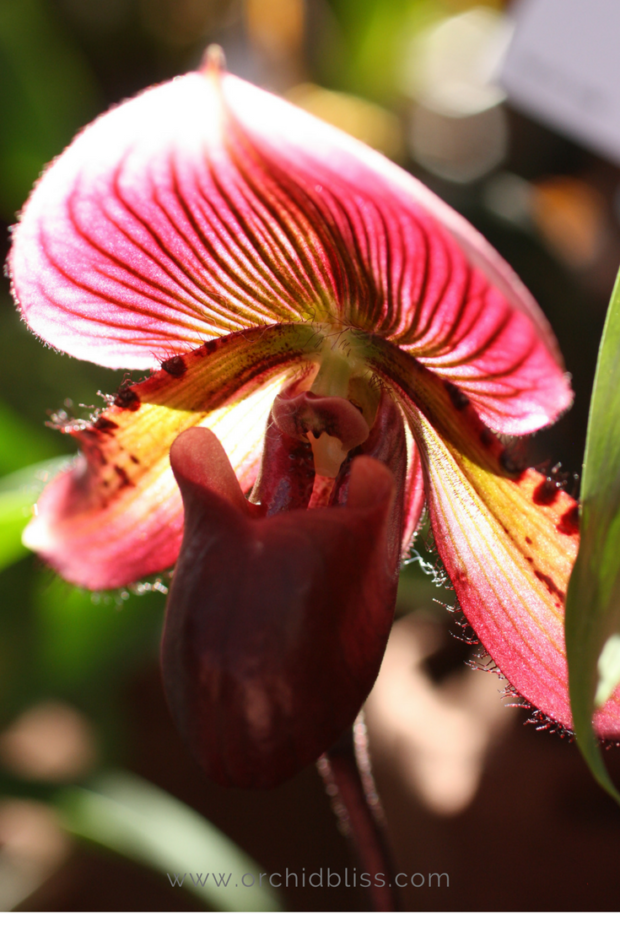
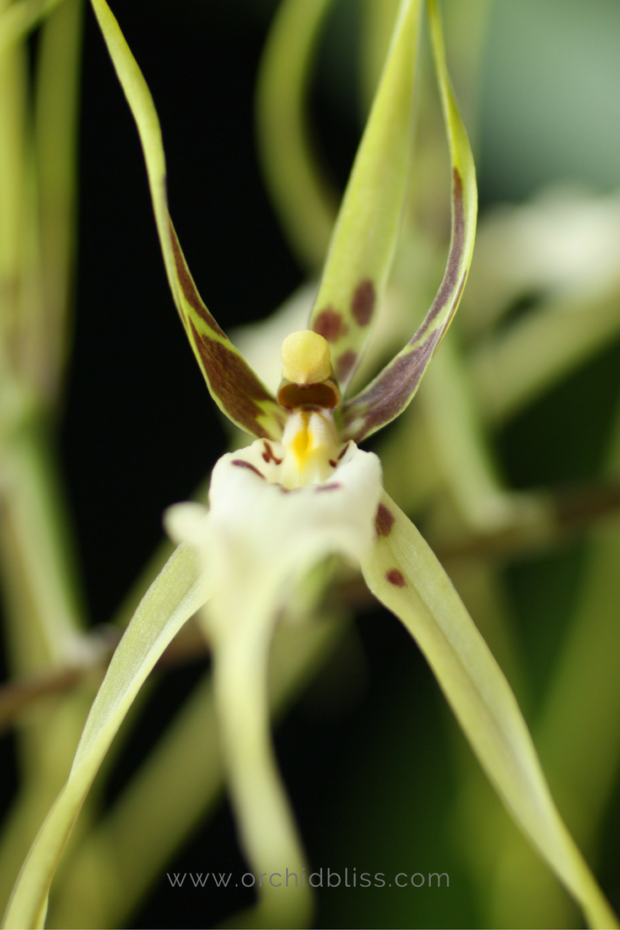
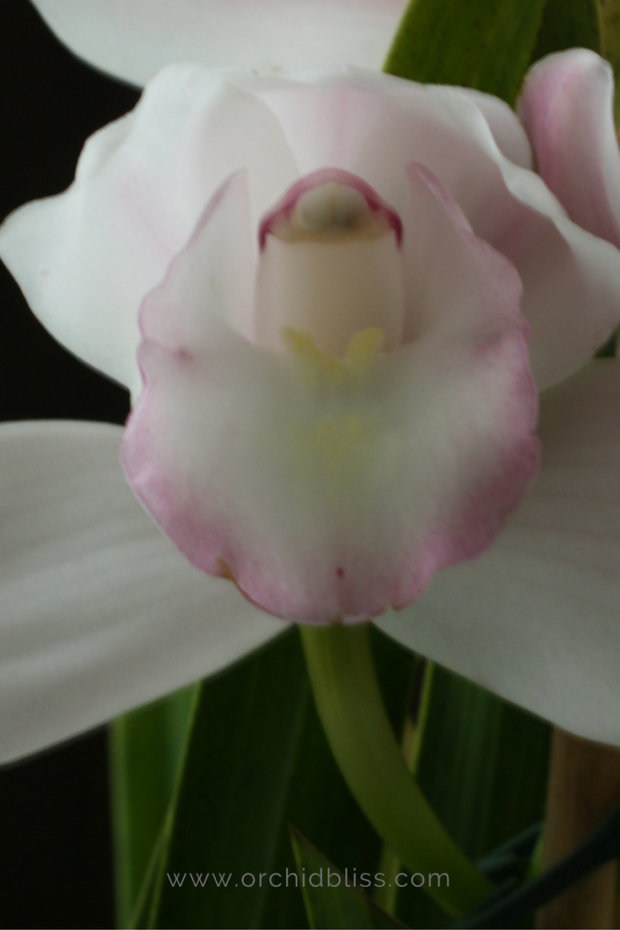
If you want something a little out of the ordinary, go for it! They are definitely worth the effort. There is nothing quite like watching a lady’s-slipper, Paphiopedilum, slowly open. It’s quite magical, really. The fragrance of some Oncidiums can fill a room, in a good way. I have a Brassia, also known as a spider orchid, with a heavenly scent–an all-natural air freshener without harsh chemicals. Cymbidiums are real show-stoppers. Storms may rage (literal or metaphorical), but you will have your own corner of paradise. And don’t forget the Cattleya, the queen of orchids.
If you don’t have a local shop specializing in orchids, there are online options available. When making your selection, either local or online, talk to the seller about the orchids. If they don’t seem knowledgeable, find another seller. Many of the same guidelines that apply to the easy-care Phalaenopsis apply to other orchids.
Paphiopedilum – SLIPPER ORCHIDS
Brassia
Cymbidium
TIP: To learn about 25 easy-to-grow orchids, click here.
Be a Discerning Shopper
If you purchase your orchid online, you will be depending on the seller to select the best orchid for you. Online sellers want you to have a good experience. They know that you, the buyer, have high expectations. Most of the time when shopping online there is a place where you can comment. It is appropriate to let the seller know what you are looking for in terms of a healthy plant. When purchasing online plants I have even called and talked to the seller and asked specific questions about different plants. I have never been disappointed.
If you have the opportunity to go to an orchid show I definitely recommend it! This is an excellent chance to talk to vendors who really know orchids. Before going, I like to have a general idea of what kind of orchid I want. At the top of my list is: will it live happily in my house? I’m not a greenhouse grower. After that, I may want one that flowers frequently or has a fragrance.
Now for the Orchids
When choosing an orchid, it is a good idea to know how to distinguish a healthy orchid from an unhealthy one. To get the most bang for your buck, pick the orchid with the most enduring blooming power rather than the one whose blooms are on their way out.
Flowers and Spikes/Stems
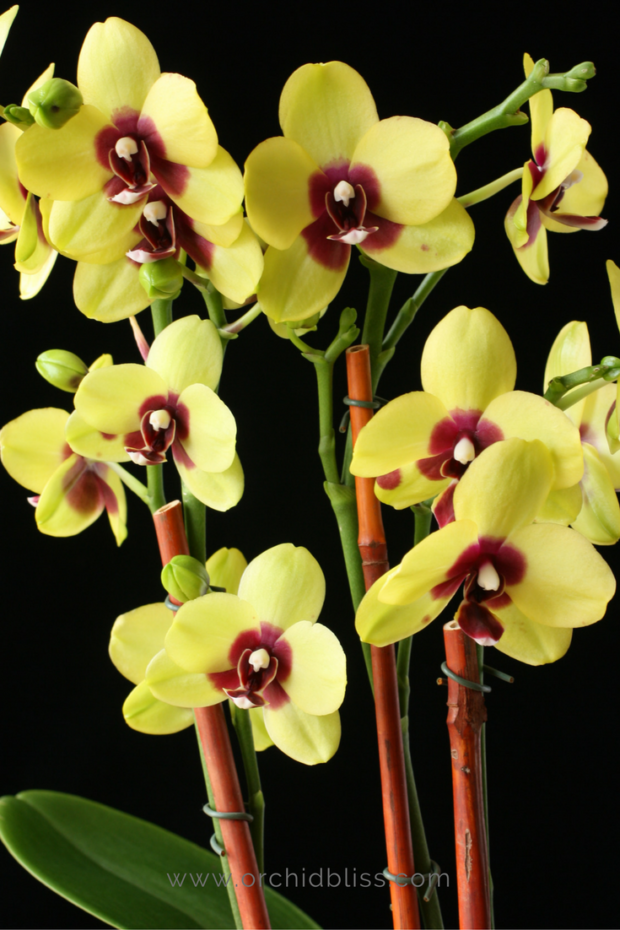
I admit that when choosing an orchid I tend to look first at the flowers. I want a plant with many beautiful blooms that are just starting to open. This way I will be able to enjoy the blooms for the longest amount of time. I also look for the number of spikes or flower stems. Why buy a plant with only one spike when I can buy one with two for the same price? The moth orchid pictured below, with three flower spikes, was the same price as another with only one spike.
To help you further, start by downloading my free cheat sheet to see where to cut the orchid flower spike after blooms have faded to trigger re-blooming. Click here for the cheat sheet. It’ll be super helpful.
Roots
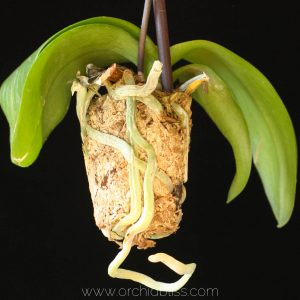
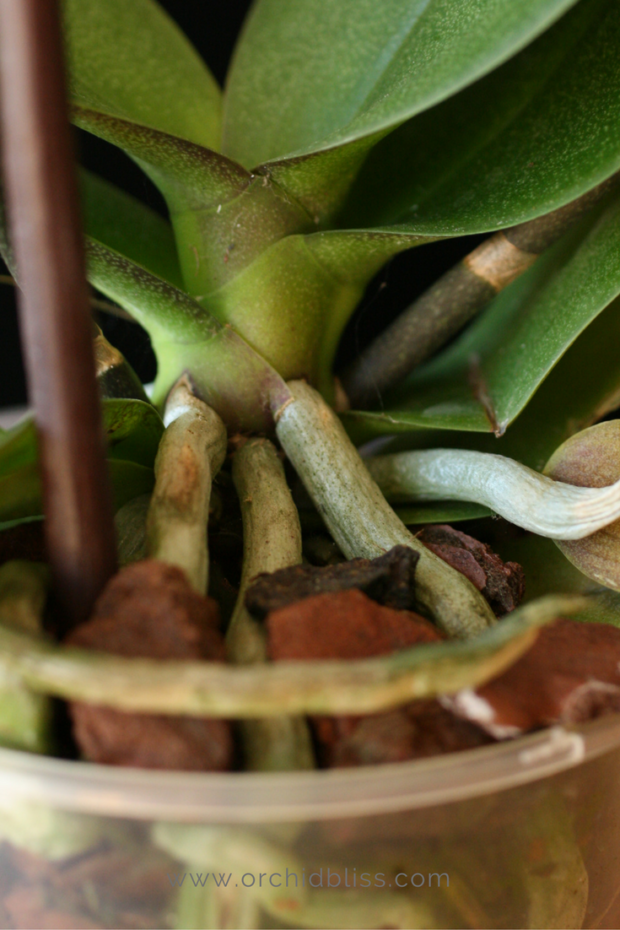
Even though my eye is immediately drawn to the flowers, they are not the only consideration. Take a moment to inspect the roots and potting media. This is especially important if the plant has been sitting on the shelf at the store. If the plant is potted in a clear plastic pot and then slipped into a secondary pot, carefully lift the orchid out of the secondary pot. Do not pull on the plant; instead, lift out the clear plastic pot to look at the roots. This precaution will prevent you from uprooting the plant, something you definitely do not want to do.
Make sure the roots are firm with green tips. Aerial roots, roots that grow right out of the pot, are just fine. Roots are bright green if they have been recently watered, but they are still healthy if they are lighter green or white. If the roots are limp, they have been overwatered and are dead. If that is the case, choose another plant.
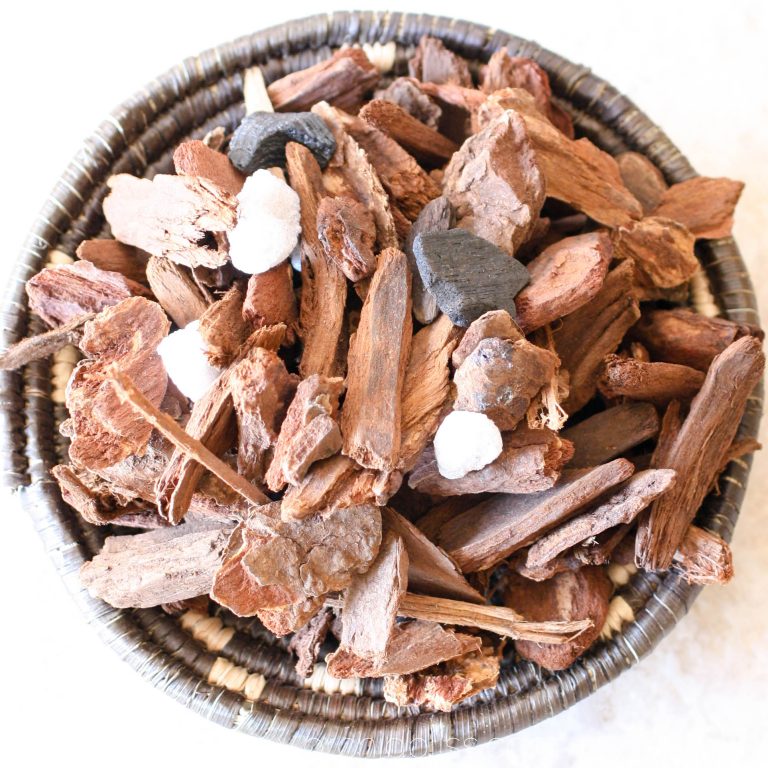
Check out the potting media and ask: Is it soggy? Does it drain well? Does it smell bad? A poor potting medium isn’t necessarily a deal breaker, as you can take the orchid home and repot it in a superior medium. As long as the media doesn’t have a foul odor and the orchid has healthy roots, the orchid may be a great choice.
Leaves
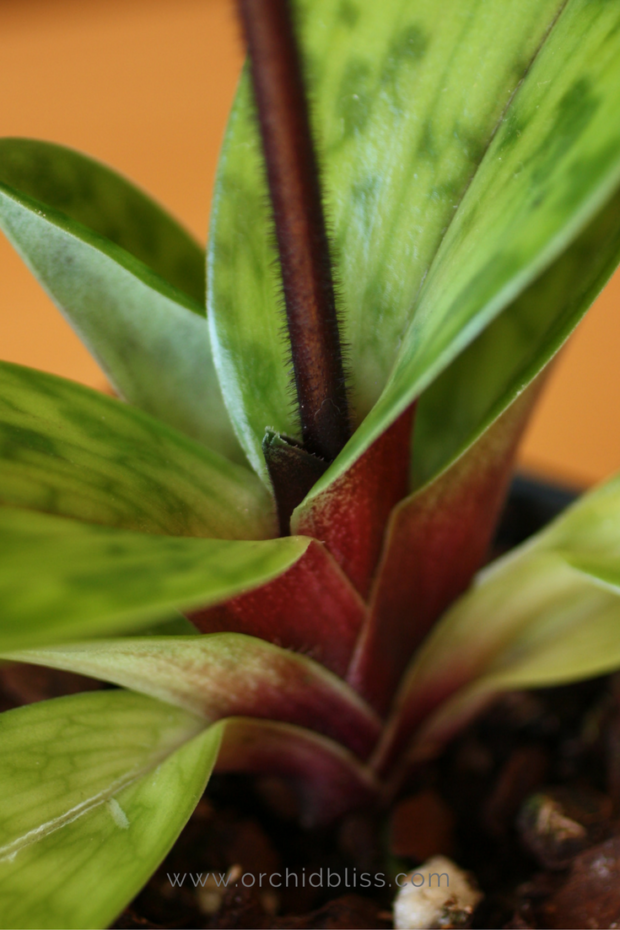
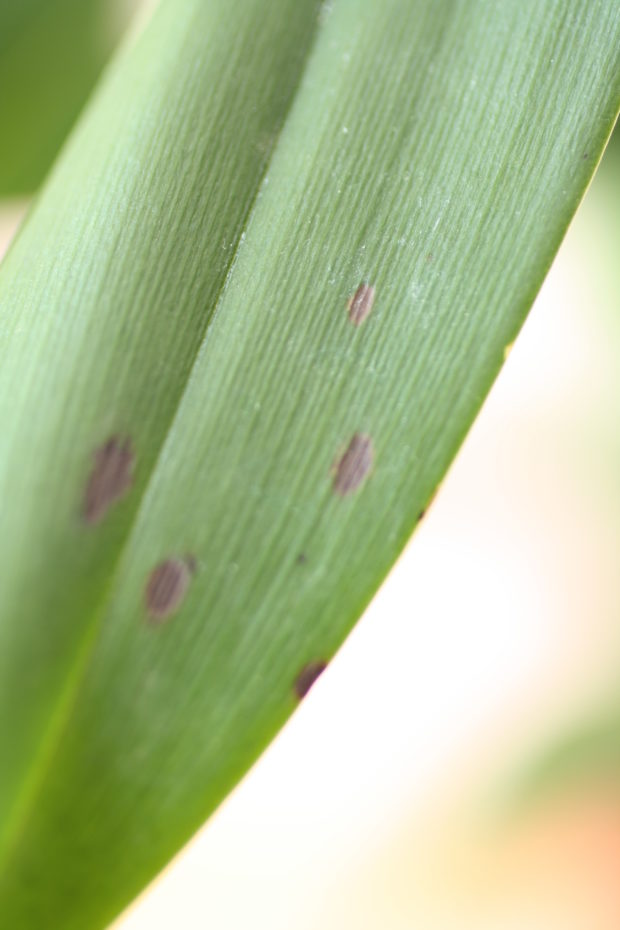
Now, look at the leaves. Bright, green, stiff leaves that point upward are healthy. New growth is also a great sign. Floppy, dark green, leathery leaves are light and water-deprived. Avoid dark, discolored spots or patches that may be a sign of disease.
Healthy Leaves
Unhealthy Leaves
Pseudobulbs
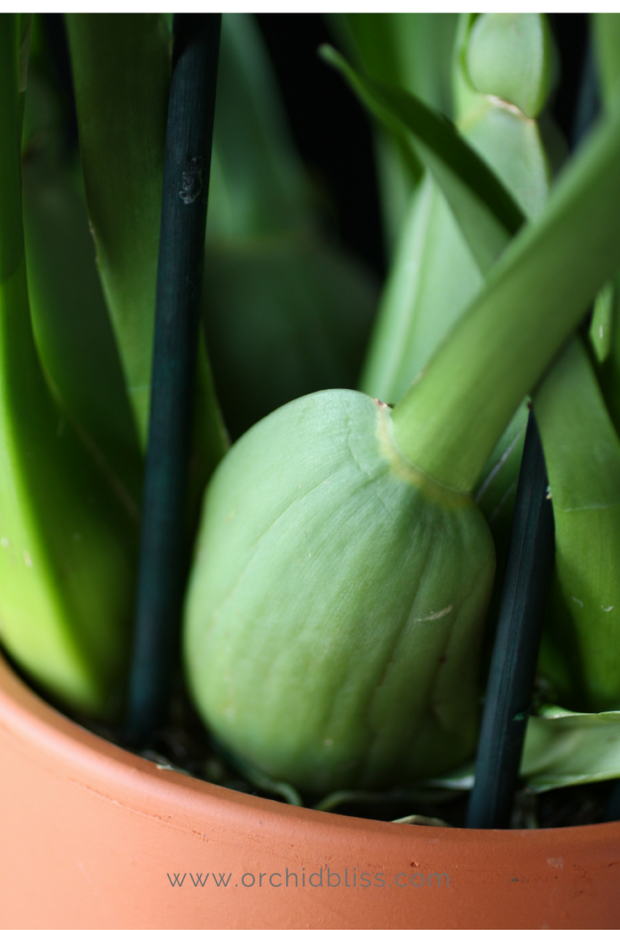
When choosing an orchid, pseudobulbs are another consideration. If you are going for a Phalaenopsis, you can skip this section. Otherwise, read on. Orchids, the Phalaenopsis and Vanda orchids being exceptions, have water storage in their pseudobulbs. Remember, when choosing an orchid, these pseudobulbs should be upright, smooth and firm, not wrinkly or squishy.
Now, for the Flowers
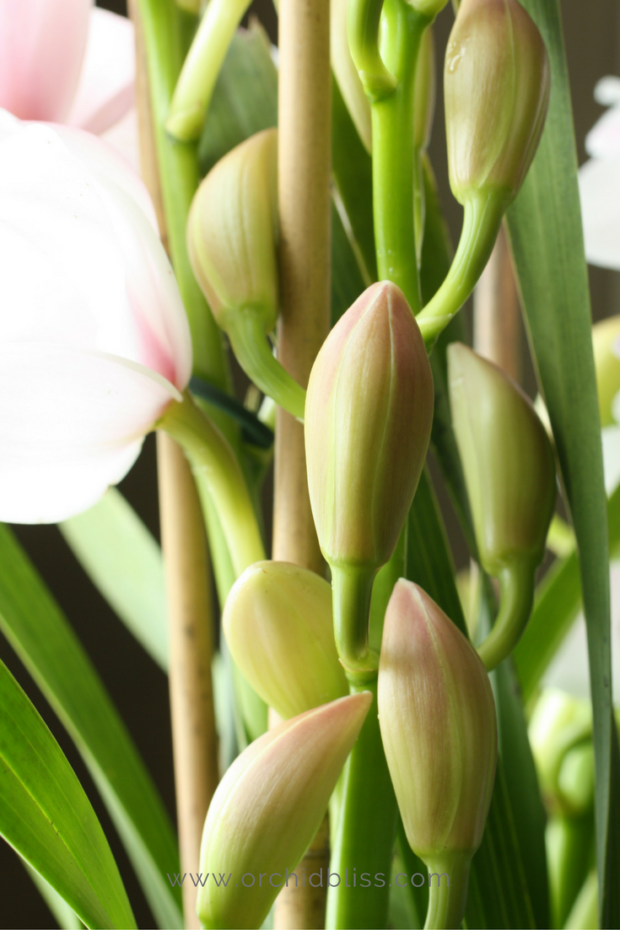
Lastly, when choosing an orchid, take another look at the flowers. Pick a plant with as many flower stems as you can. For optimum bloom time, find an orchid with lots of healthy unopened flower buds. Inspect the buds at the end of the spike. If they appear shriveled, it is likely that they will shrivel up and fall off without ever blooming.
When looking at the buds, be sure to take off your blinders and look at the plant as a whole. This next image is an example of what not to do. When I bought this Cymbidium, pictured below, I was so enchanted by the number of buds I neglected to look at the leaves, which were covered in dark spots, a sign of a bacterial infection. Thankfully I did not set it with my other orchids, and I was able to return the orchid and exchange it for another one. You can be sure that I took the time to examine the leaves this time!
Choosing an Orchid to Gift
No matter which type of orchid you choose, being an educated and discriminating shopper will help you buy the healthiest, most exquisite orchid for your money, one that will lift your spirit and everyone else who will have the pleasure of seeing it. After giving my friend Mary Gardner an orchid, she texted me this kind message:
“Why does that orchid make me so happy? Is it because it feels so good to get an unexpected thank you, or is it because the flower itself is so delicate and beautiful that it touches my soul? Do they do that for you too? Either way, it sure made my day, thank you.”
Spread the joy, and share an orchid!
Ready to learn more?